

Everything we know so far about Somerset Council’s 2026 budget
By Laura Linham 12th Jan 2026
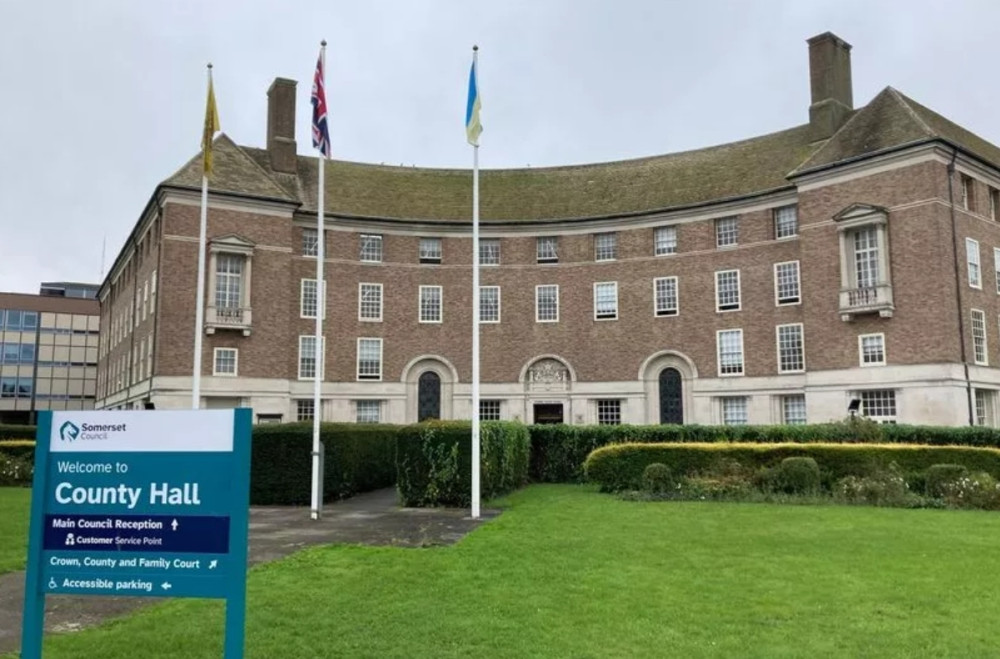

We are a little over two months out from March 11 – the date in law by which all local authorities in the UK must have set their budgets for the coming year.
Councils have to balance their books every year and set balanced budgets for the following 12 months – which usually involves increasing council tax by the maximum possible amount.
Somerset Council continues to be in a "fragile" financial position, with councillors and officers coming up with numerous proposals in a bid to plug an expected £73m budget gap for 2026/27.
Following the announcement of the local government funding settlement just before Christmas, we can expect many frantic weeks of negotiation behind the scenes, with councillors and senior officials meeting with local MPs and government ministers to make the case for more and fairer funding.
The exact details of the council's budget won't be known until the end of January – and even then, there could be several twists and turns before we come to the crucial full council meeting in Bridgwater on February 25.
Here's a summary of everything we know so far:
Your council tax will be going up (but by how much is unclear)
Council tax bills in Somerset are split into several parts – one for Somerset Council, one for your local town or parish council, one for Avon and Somerset Constabulary, and one for Devon and Somerset Fire and Rescue Service.
Download our Nub News App!
- It’s FREE and available now- Breaking news notifications
- Your Town in Your Pocket


By law, Somerset Council can only raise its portion of council tax by 4.99 per cent each year without triggering a referendum.
Of this 4.99 per cent, two per cent is ring-fenced for adult social care, leaving the remaining 2.49 per cent for other local services (such as children in care, bin collections, planning and fixing potholes).
Somerset has a lower-than-average council tax base, meaning that it cannot generate as much money to fund local services as other comparable unitary authorities, such as those in Cornwall, Dorset and Wiltshire.
Last year, the council was allowed by the Ministry of Housing, Communities and Local Government (MHCLG) to put council tax up by 7.49 per cent without a referendum, in light of this disparity.
Negotiations are ongoing with central government over whether any similar discretionary increase could be allowed – with the council's leader Bill Revans and deputy Liz Leyshon separately confirming on Wednesday (January 7) that "illustrative figures" for a rise of up to 10.99 per cent had been outlined to the relevant ministers.
Any final decision on council tax increases will go through the relevant scrutiny committees before the full council – but we don't know how soon the government will give a final ruling on above-referendum increases.
To pastiche Dave Benson Phillips from Get Your Own Back: "It's going up… but to just how high?".
Your local portion council tax will go up too

In addition to Somerset Council's portion of council tax rising, your local town or parish council is also expected to put its share of council tax up as well.
But while any Somerset Council increase is capped at 4.99 per cent a year, town and parish councils have no such cap – meaning they can legally put it up as much as they like, year on year.
Several town and parish councils have already implemented significant council tax rises as part of devolution deals, whereby they stepped in to run local services to reduce the burden on Somerset Council.
Bridgwater, Taunton and Yeovil's town council have all agreed to take on big responsibilities as part of their devolution deals – with Bridgwater Town Council assuming control of the Northgate Docks once they have been regenerated, and Yeovil Town Council tasked with running the Octagon Theatre when it finally reopens.
This trend is only likely to continue as further devolution deals are agreed – so keep an eye on what your town or parish council wants to take on in order to avoid any nasty surprises when your first new bill arrives in April.
You'll have to pay more for certain services – including the cost of getting married
The council's executive committee published proposals in early-December 2025 for additional savings, which could raise around £20.2m in 2026/27 and a further £4.76m by 2030/31.
Unlike in previous years, many of the savings proposals come not from additional cuts to existing services, but from increasing fees and charges for residents.

Under the proposals, Somerset's 624 holiday lets will be charged commercial rates for waste collection – costing their owners around £600 a year, and raising around £130,000 for the council.
The council will increase the cost of getting married at its registry offices – raising an expected £48,000, as well as an additional £36,000 from increasing the cost of wedding certificates – and will also charge residents for new garden waste bins (raising £155,000).
The council is also budgeting for an increase in income from commercial operations, including the Port of Bridgwater as part of the Hinkley Point C construction (£100,000) and the newly opened Ham Hill visitor centre near Yeovil (£20,000).
Exceptional financial support will still be needed
'Exceptional financial support' does not mean additional cash from central government; instead, it amounts to the government allowing the council to use income from asset sales to pay for day-to-day services.
Councils cannot normally use the sale of land, property and other assets (which form part of its capital budget) to fund day-to-day spending, such as staff salaries (which form part of its revenue budget).
The government has provided exceptional financial support in both of the last two years, with the executive indicating on Wednesday (January 7) that it had applied for a third year of support – albeit asking for a smaller amount than the previous two occasions.
If this is granted, the council will continue the sale of its remaining commercial investments (which were inherited from the four district council in April 2023) and various 'non-operational assets', such as agricultural land and under-utilised buildings.
This support, if granted, won't be confirmed until a few weeks or even days before the budget – meaning that the budget which goes before the full council may have to find alternative ways of being balanced if the government does not make its intentions clear quickly.
Capital projects may be delayed or scaled back
The council technically sets two budgets: a revenue budget (for day-to-day spending on services) and a capital budget (for building new schools, roads and other infrastructure).
While the revenue budget is funded through council tax, the capital budget is primarily made up from central government grants, housing developer contributions, the sale of assets and external borrowing.
The council has millions of pounds in central government grants still available which have been earmarked for regeneration projects across Somerset – whether it's the health and social care academy in Bridgwater, Tonedale Mill and Tone Works in Wellington, or the Octagon Theatre in Yeovil.
Other government grants are also available for major transport projects, such as the upgrading of the Edithmead roundabout near junction 22 of the M5 in Highbridge.
However, the rising cost of construction materials and associated labour, coupled with any legal or logistical challenges (e.g. the purchase of necessary land) may lead to some of these projects being scaled back or delayed until a later date.
The ongoing Life Factory scandal in Glastonbury means that the council has to be doubly certain that all central government grants are spent properly – otherwise it will be harder to secure such funding in the future.
Download our Nub News App:
- It’s FREE and available now
- Breaking news notifications
- Your Town in Your Pocket
Share: